A digital loyalty program customers actually use
In short
- A loyalty program that works offers sign up in seconds, a reward people feel quickly and personal contact that never floods
- A digital program does not need an app: a phone number, WhatsApp and a CRM can do the job
- Personal perks such as birthday treats or early access often mean more than a permanent discount
- When the program connects to your till, online store and CRM, rewards add up and go out automatically
A digital loyalty program that customers actually use rests on three things: joining takes seconds, the first reward comes quickly, and the contact feels personal without becoming noise. You do not need an app to download or a plastic card people leave at home. A phone number, a CRM that remembers every customer and well timed WhatsApp messages are usually enough.
What is a digital loyalty program?
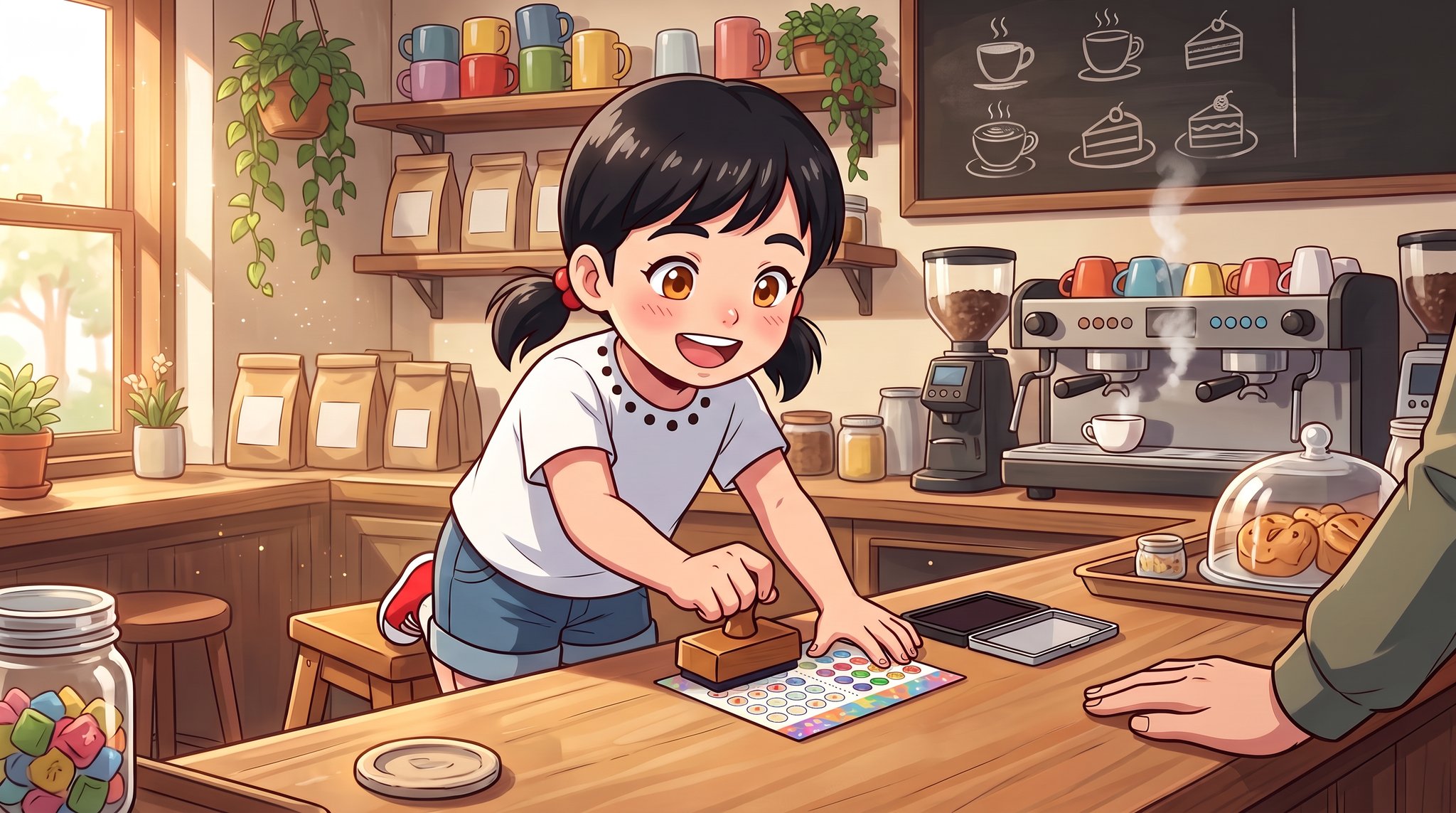
A digital loyalty program rewards customers for coming back, with everything tracked in a system instead of on paper. Customers are recognised by their phone number at the till, on your website or on WhatsApp, and every purchase is recorded automatically.
Whether you call it a loyalty program, a loyalty programme or a rewards club, the difference from a paper punch card is more than technical. When everything lives in a CRM, you know who your regulars are, what they like and when they last visited. The program stops being a discount tool and becomes a way to know your customers.
Why do so many loyalty schemes go unused?
Loyalty schemes rarely fail because customers dislike rewards. They fail because they are a hassle to use, or because the reward is not worth the effort.
- Joining means a long form and an email confirmation
- Customers have to download yet another app, which they delete soon after
- The reward is so far away that nobody feels any progress
- The rules are complicated: expiring points, small print, blackout days
- Messages are generic and unrelated to what the customer actually buys
- Staff do not mention the program because it slows down the queue
The good news is that every one of these problems can be fixed, mostly with better design rather than a bigger budget.
Which type of loyalty program suits your business?
The right type depends on how often your customers buy and what they value. You do not need anything clever. One mechanism that customers understand instantly beats an elaborate one they ignore.
Digital stamp card
Every purchase adds a stamp, and a full card earns a reward. Ideal for cafés, bakeries, car washes and any business customers visit often. It is the easiest to understand, and the easiest way to show people how close they are.
Points
Every purchase earns points based on what was spent, and points can be redeemed next time. This suits online stores and shops with varied baskets. Customers should be able to see their balance and what it buys at any moment.
Tiers
The more a customer buys, the higher their tier and the better their benefits. This works for businesses with long relationships, such as a nail salon or a B2B supplier. A tier gives customers a goal and a sense of status.
Perks and personal treatment
Not every program needs discounts. Early access to a new collection, a birthday treat, an invitation to a customer evening or priority booking can carry the whole program. A boutique, a restaurant or a fitness studio can build a scheme entirely around recognition, and that is often what customers remember.
Paid membership
Customers pay a membership fee in exchange for ongoing benefits such as free delivery, a standing discount or priority service. It suits businesses whose customers buy often over a long period, as long as the value is obvious. Make renewal and cancellation simple and transparent.
How do you build a loyalty program, step by step?
A good program starts with one clear goal and ends with a connection to the systems that run it for you.
- Pick one goal. More frequent visits? Trying more products? Bringing friends? The goal decides the mechanism.
- Choose one simple mechanism. Stamps, points, tiers or perks. One, not four.
- Choose rewards that cost you little and mean a lot to the customer. A small extra, an upgrade, early access or faster service.
- Make joining instant. A name and phone number at the till, or a WhatsApp link where a bot signs people up inside the chat.
- Ask for clear consent to receive messages. The customer explicitly agrees to updates and offers, and that consent is stored in the CRM. Privacy and anti spam rules in many countries, including GDPR in Europe, expect exactly this.
- Connect the till, the online store and the CRM. Every purchase is recorded automatically, stamps or points add up by themselves, and the customer gets an update.
- Brief your team. One short sentence every staff member says at the till or at the end of a call.
- Review after a few months. How many joined, how many came back, which rewards were actually redeemed.
How do you get customers to join and keep using it?
Customers use a loyalty program when it is convenient and they feel its value quickly. It all starts at the moment they join.
Give the first reward straight away
A welcome message on WhatsApp with a small reward they can use on their next visit gives them a reason to come back before they forget they joined.
Show progress
“Two more stamps to your free treat.” A message like that after a purchase turns the program into a small game people want to finish.
Send messages that fit the customer
Someone who buys cat food does not need an offer on dog toys. When your CRM knows what each customer buys, you can send each person only what is relevant to them. Our guide to customer segmentation shows how to set up those groups.
Do not flood
A program that sends a message every other day loses members fast. A few good messages with a clear reason beat many generic ones. The principles behind WhatsApp broadcasts that don’t get you blocked apply in full.
Example: a pet supplies shop with a store and a website
A customer buys a bag of dog food at the counter, and the cashier asks if she would like to join the loyalty program. She gives her phone number, and within seconds a WhatsApp message arrives: welcome, here are your first points, and this is how to use them.
From then on, it runs itself. The till and the online store both feed the same CRM, so points add up wherever she buys. Around the time the bag usually runs out, she gets a reminder with a link to reorder for delivery. On her dog’s birthday, which she shared when she joined, a small treat is waiting at the counter. If she has not bought anything for longer than usual, the CRM flags her and the shop sends a short personal note.
The owner sees on one dashboard who the regulars are, which products bring people back and who has stopped coming. The program has become a real customer retention tool, not just a points tally. Online shops can take the same idea further, as we describe in our article on turning first time buyers into repeat customers.
What does the CRM do behind the scenes?
The CRM is the heart of a digital loyalty program. It recognises each customer by phone number, records every purchase from the till, the website or a WhatsApp chat, and counts stamps or points without anyone doing it by hand.
It also stores each customer’s consent to receive messages, builds groups based on what people buy, and triggers automatic messages at the right moment. When the CRM is built specifically for your business, the customer data stays yours rather than locked inside someone else’s platform.
A launch checklist
- Joining takes seconds, with no app and no long form
- The first reward arrives immediately, and the next one is clearly within reach
- The rules can be explained in one sentence
- Customers have given explicit consent to messages, stored in the CRM
- Till, online store and website are connected, and every purchase is recorded automatically
- Every staff member can introduce the program in one sentence
Simple, fast and personal
A loyalty program people actually use is simple, quick and personal. It needs no app, avoids complicated rules, never sends messages for the sake of it, and connects to your systems so nobody has to count stamps by hand. At Kaede Digital we build loyalty programs as part of custom CRM development, with WhatsApp sign up and updates and a connection to your till or online store, so the program keeps working while you get on with running the business.
FAQ
Do I need an app to run a digital loyalty program?
No. Few customers want another app for a single business. A phone number as the identifier, WhatsApp messages and a CRM that tracks every purchase are enough to deliver the full experience, with nothing to download.
Is a discount or a perk better?
It depends on the business, but a permanent discount teaches customers to wait for offers and eats into your margin. Perks such as a small gift, an upgrade or early access often cost less and feel more personal. Many programs combine the two.
How do I know if my loyalty program is working?
Check whether members come back more often than non members, how many rewards are actually redeemed, and how many members have stopped buying. When every purchase is recorded in the CRM, you can see all of this on one dashboard.
Does a loyalty program work for B2B businesses?
Yes, in a different form. Instead of stamps and points, a B2B program can offer tiers based on volume, a dedicated account manager, faster response times or early access to new products. The principle is the same: reward the customers who stay.
Custom CRM
Want us to build this for you?
More from the journal
 Custom CRM
The sales dashboard every owner should check each morning
Most dashboards are full of charts nobody acts on. Here are the few numbers worth checking every morning, and how to turn them into today's decisions.
 Custom CRM
Customer satisfaction surveys people actually answer
Most surveys arrive too late, ask too much and vanish into a spreadsheet. Here is how to build a short survey customers answer, and what to do with each reply.
 Custom CRM
SMS marketing vs WhatsApp: when to use which
SMS and WhatsApp are not rivals; they are tools for different jobs. Here is how to choose the right channel for every message, and how to connect both to one customer record.